
Nourishing since 1935
Honest. Pure. Delicious.
Lakewood is an independent family juice company. Since 1935 we have bottled pure organic and premium juices, Fresh Pressed from fruit and vegetables and packed in glass. Here is a guide to our five lines, what goes into them, and what the words on the label mean.


Start with a goal
What people reach for, and why
Pick the reason you are pouring a glass. Tap a fruit to read what the research looks at, or show every juice that fits the goal.
Heart and circulation
Beets for their nitrates, pomegranate and concord grape for polyphenols. The research here centers on blood vessel function and how freely blood moves.
Reach for Pure Beet, Beet Ginger Turmeric, Pure Pomegranate or Pure Concord Grape.
Digestion
Prune for regularity, ginger for a settled stomach, pineapple and papaya for their enzymes, aloe for a soothing glass.
Reach for Pure Prune, Pure Pineapple, Carrot Ginger Turmeric, Pure Aloe or Nurture Golden Glow.
Immune support
Citrus is the classic place to start, and Nurture Zesty Defense adds vitamin C, vitamin D3 and zinc on top of lemon, orange and ginger.
Reach for Pure Orange, Pure Lemon, Pure Pink Grapefruit or Nurture Zesty Defense.
Recovery and performance
Beets before, tart cherry after. Two of the most common reasons people pick up a juice instead of a sports drink.
Reach for Pure Beet, Pure Tart Cherry or Beet Ginger Turmeric.
Everyday antioxidants
The dark fruits carry the pigments people associate with antioxidant activity: anthocyanins, polyphenols and punicalagins.
Reach for Pure Pomegranate, Pure Blueberry, Pure Concord Grape or Nurture Berry Thunder.
Liver support
Beets bring betaine, turmeric brings curcumin, and both are studied in connection with liver function.
Reach for Pure Beet, Beet Ginger Turmeric or Carrot Ginger Turmeric.
Skin and healthy aging
Carotenoids for skin, polyphenols studied in older adults, and aloe for a gentle daily glass.
Reach for Pure Carrot, Mango Blend, Pure Aloe or Nurture Cherry Pomegranate Bloom.
Winding down
Tart cherry carries natural melatonin, which is why a small glass has a long history in evening routines.
Reach for Pure Tart Cherry or Pure Black Cherry.
Hydration
Aloe and celery are mostly water with electrolytes, and citrus makes plain water worth drinking.
Reach for Pure Aloe, Pure Celery or a splash of Pure Lime in water.
Kids
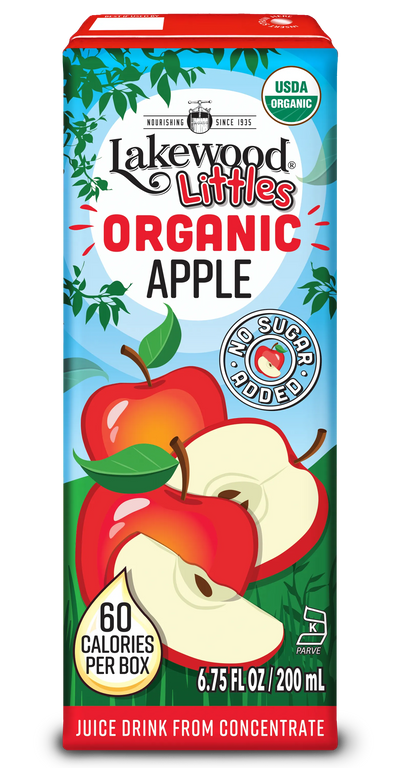
Littles are 100% organic fruit juice with no added sugars or colors, in a box that fits a lunchbox.
Reach for Littles juice boxes, Pure Apple or Pure Concord Grape.
By the fruit
What we press
Every fruit and vegetable we press, what the research looks at, how people drink it, and which juices it goes into.
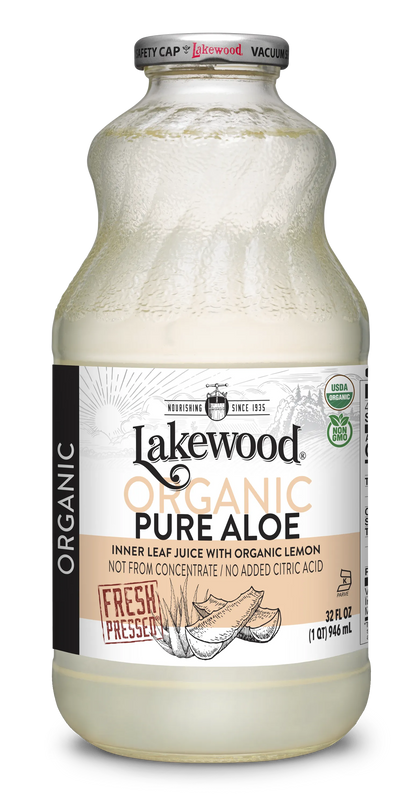 Aloe
Aloe
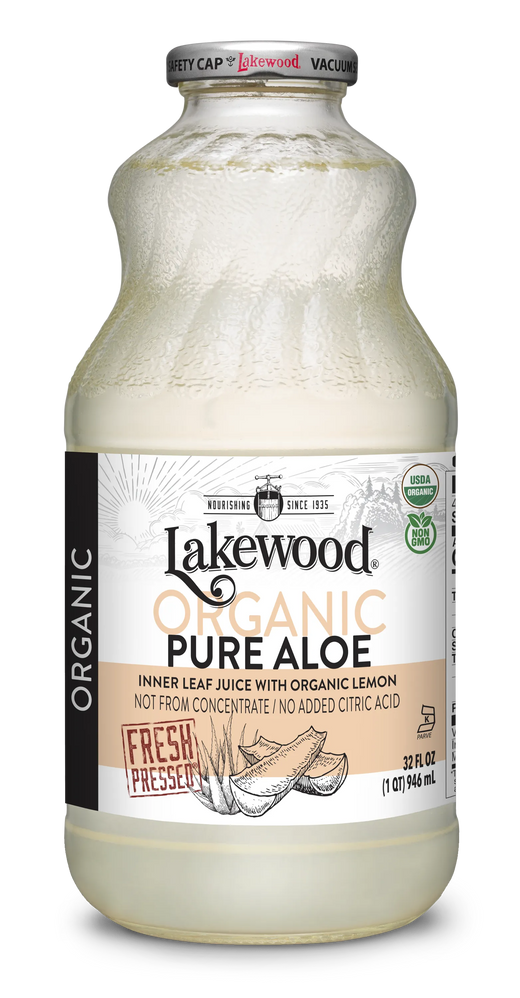
Aloe
Clean and mild, closer to water than to fruit juice. Our Pure Aloe is Fresh Pressed from three pounds of organic aloe with organic lemon juice instead of preservatives, and the Inner Fillet is aloin free.
- Polysaccharides
- Acemannan
- Vitamin C
The inner fillet gel is mostly water, with polysaccharides including acemannan. Research interest centers on how those polysaccharides interact with the lining of the digestive tract, which is why aloe has such a long history as a soothing drink. Inner fillet is the mild part of the plant, with the bitter latex layer removed.
Mild enough to drink straight, chilled. Most people mix 2 to 4 ounces into water, juice or a smoothie. The label suggests 2 to 4 fl oz twice daily.
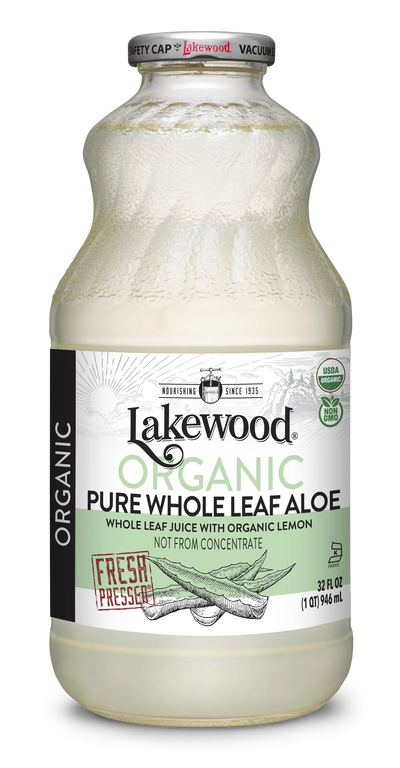
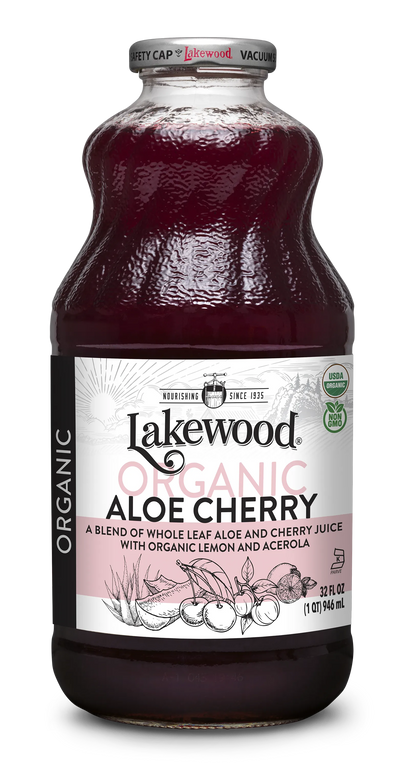
 Apple
Apple


Apple
Mild, sweet and familiar, the juice most kids meet first.
- Polyphenols
- Vitamin C
- Potassium
Apples carry polyphenols, chiefly quercetin and chlorogenic acid, which are studied for antioxidant activity. Apple juice is also a straightforward source of potassium and natural fruit sugars, which is part of why it is the first juice most families reach for.
Cold and straight for most of the year. In fall, warm it gently with a cinnamon stick.
 Beet
Beet


Beet
Earthy, deep red and a little sweet, and one of the most studied vegetables in the juice aisle.
- Dietary nitrates
- Betaine
- Folate
- Potassium
Beets are unusually high in dietary nitrates. The body converts those nitrates into nitric oxide, and research on nitric oxide focuses on its role in relaxing and widening blood vessels, which in turn affects how efficiently blood and oxygen move through the body. That is the mechanism behind the athletic studies, and it is also why beet juice gets attention for circulation and blood pressure generally. Beets also contain betaine, a compound studied for its role in liver function and in how the body handles homocysteine and fats.
Strong on its own, and plenty of people like it that way. If it is too much, cut it with club soda or sparkling water, or stir a few ounces into carrot or orange juice. Start with about 4 ounces.
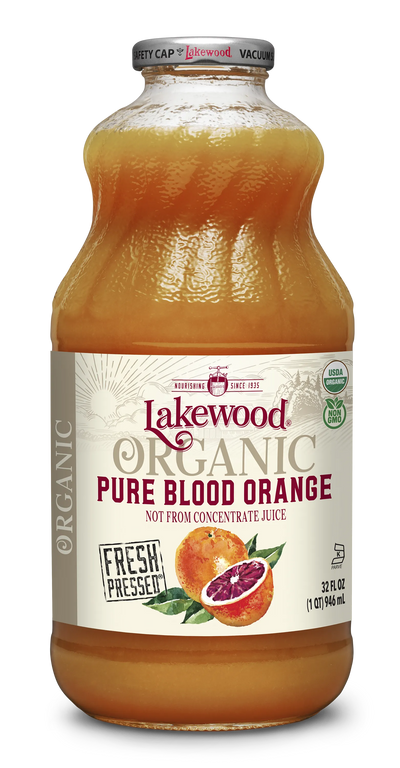
 Blood Orange


Blood Orange
Citrus with a berry edge and a deep red blush.
- Vitamin C
- Anthocyanins
- Folate
Blood oranges carry the vitamin C of any orange plus anthocyanins, the same red and purple pigments found in berries. Those pigments are what give the juice its color, and they are studied for antioxidant activity alongside vitamin C's role in normal immune function.
Straight, or over ice with sparkling water for a spritz with no sugar added.
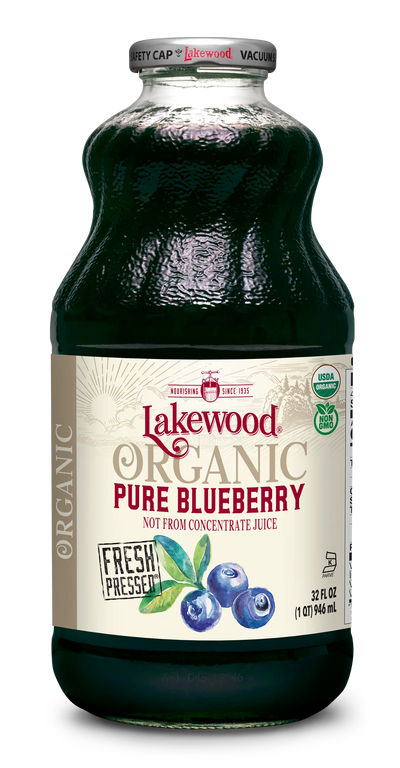
 Blueberry


Blueberry
Deep, round and gently sweet.
- Anthocyanins
- Polyphenols
- Vitamin K
Blueberries are among the most anthocyanin-rich fruits there are. Research on those pigments looks at oxidative stress, at blood vessel function, and at memory and cognition in older adults, which is why blueberry turns up so often in studies on healthy aging.
Straight, blended into smoothies and yogurt, or poured over sparkling water with a squeeze of lemon.
 Carrot


Carrot
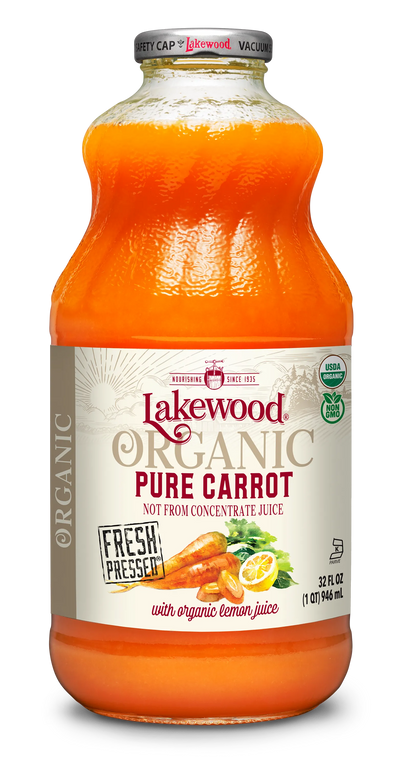
Sweet and earthy, and a natural partner for ginger or orange.
- Beta carotene
- Vitamin A
- Potassium
Carrots are a leading source of beta carotene, which the body converts into vitamin A as it needs it. Vitamin A is required for normal vision, for immune function, and for the maintenance of skin and the linings of the body. Carrots also carry potassium and other carotenoids studied for antioxidant activity.
Good on its own. It also takes well to orange, a squeeze of lemon, or a little ginger.
 Celery


Celery
Grassy, savory and barely sweet.
- Potassium
- Electrolytes
- Apigenin
Celery juice is mostly water with electrolytes, chiefly potassium and sodium, which is the basis of its reputation as a hydrating morning drink. It also contains apigenin and luteolin, plant compounds studied for antioxidant activity.
Most people drink it first thing, cold. A squeeze of lemon or lime takes the edge off the grassiness.
Used in our blends.
 Cherry


Cherry
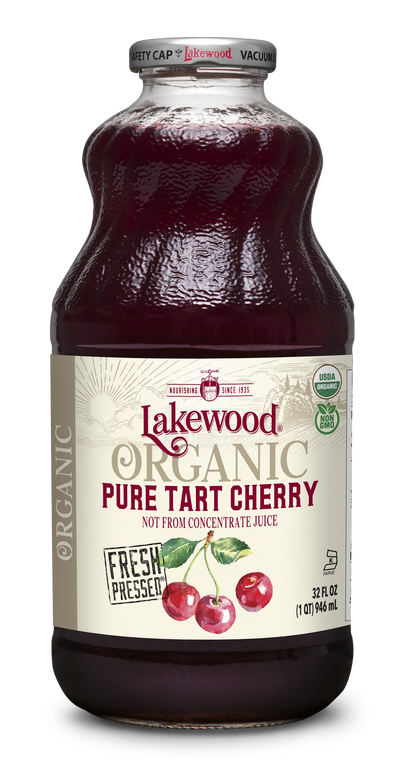
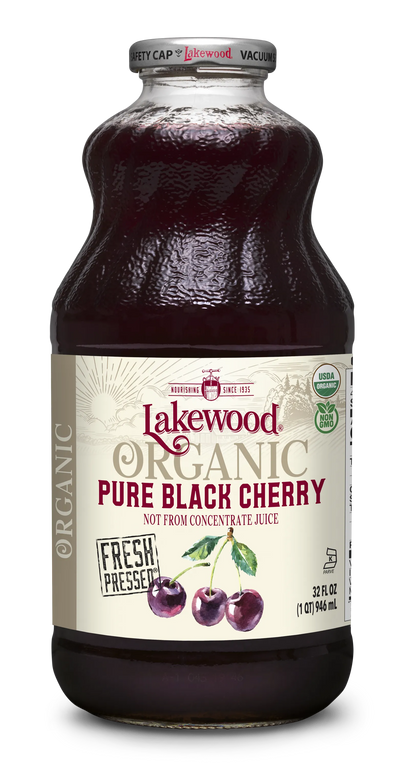
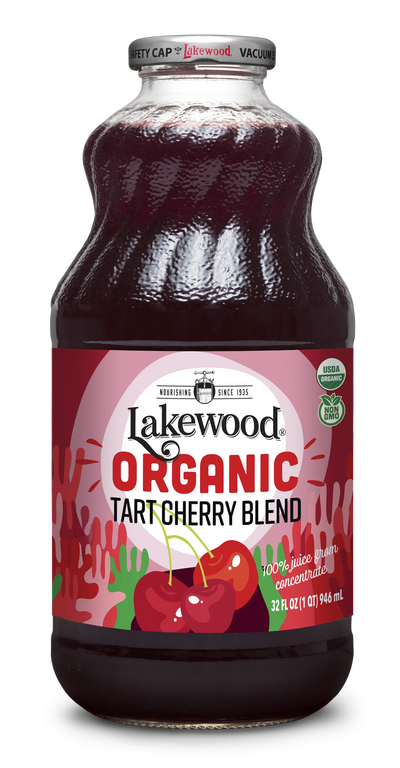
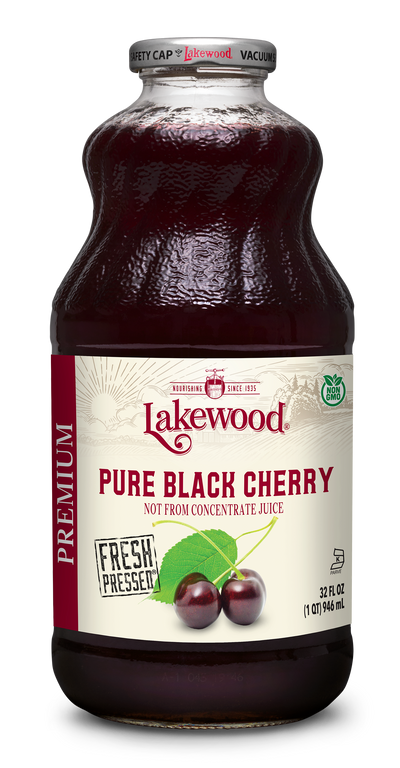
Tart cherry is sharp and full flavored, black cherry is darker and sweeter.
- Anthocyanins
- Melatonin
- Polyphenols
Tart cherry is one of the few foods with measurable natural melatonin, the hormone tied to the sleep cycle, which is why it shows up in evening routines. Its anthocyanins are studied for their effect on muscle soreness and recovery after hard exercise, and separately for uric acid, which is why tart cherry comes up in conversations about joint comfort.
An ounce or two of tart cherry in sparkling water makes an easy evening drink. Black cherry is sweet enough to drink straight.
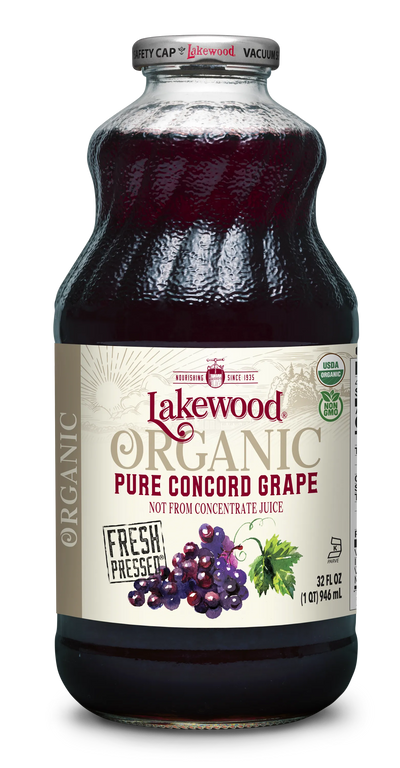
 Concord Grape


Concord Grape
Big, jammy and unmistakable.
- Polyphenols
- Resveratrol
- Anthocyanins
Concord grapes keep their skins and seeds in the pressing, which is where the polyphenols live, including resveratrol. Research on grape polyphenols looks at the flexibility of blood vessels and at how they influence circulation, much of the same ground covered by the work on red wine without the alcohol.
Straight for kids. Adults often cut it half and half with sparkling water, which keeps the flavor and drops the sweetness.
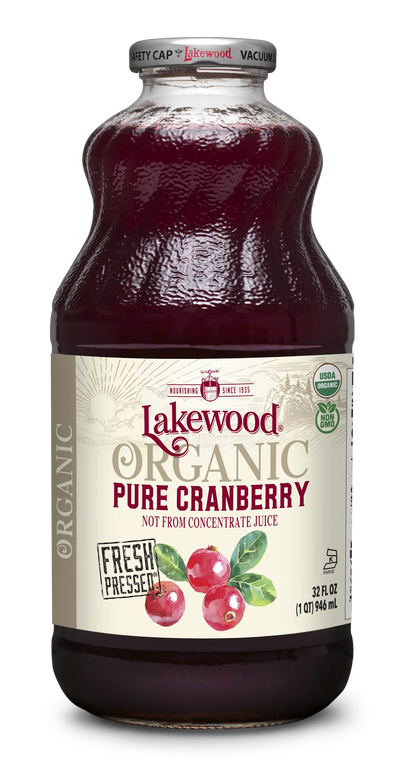
 Cranberry


Cranberry
Sharp, tart and bracing, which is why it blends so well with sweeter fruit.
- Proanthocyanidins
- Vitamin C
- Polyphenols
Cranberries carry a distinctive form of proanthocyanidin. Research on these compounds looks at how they keep certain bacteria from adhering to the lining of the urinary tract, which is the basis of cranberry's long association with urinary tract health. They also carry vitamin C and a broad range of polyphenols.
Very tart on its own. Mix about 2 ounces with 6 ounces of water or sparkling water, or blend it with apple or orange juice.
 Ginger


Ginger
Warm and peppery, and a little goes a long way.
- Gingerols
- Shogaols
Ginger's heat comes from gingerols and shogaols. These are the compounds behind its long use for a settled stomach, and research looks at how they affect the rate at which the stomach empties and at nausea, including during travel and pregnancy. They are also studied for their effect on inflammatory markers.
Ginger comes through in our blends. A splash of a ginger blend in hot water with lemon makes a simple warm drink.
 Lemon
Lemon


Lemon
Bright and sour, the workhorse of the kitchen.
- Vitamin C
- Citric acid
- Flavonoids
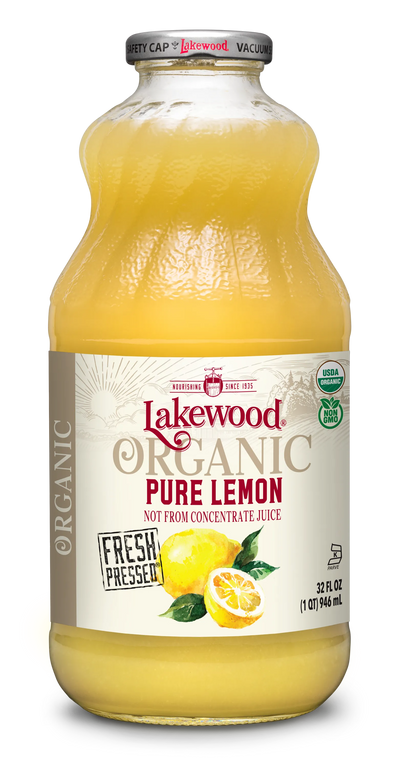
Lemons are a direct source of vitamin C, which the body needs for normal immune function and for building collagen. Citric acid is studied for its role in how the body handles minerals, including calcium in the kidneys. We also use organic lemon juice in our aloe, so no preservatives are needed.
For lemonade, dressings and marinades, or stirred into hot water with honey. A splash wakes up any other juice in the fridge.
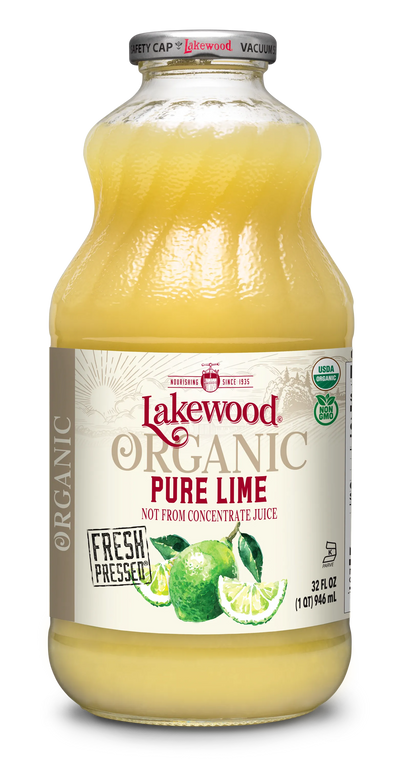
 Lime
Lime


Lime
Sharp and aromatic, brighter than lemon.
- Vitamin C
- Flavonoids
Limes carry vitamin C and citrus flavonoids. A small amount lifts the flavor of everything it is added to, which is the simplest reason to keep a bottle on hand.
A splash in sparkling water is the easiest upgrade to plain water there is. Also good in dressings and mocktails.
 Mango
Mango


Mango
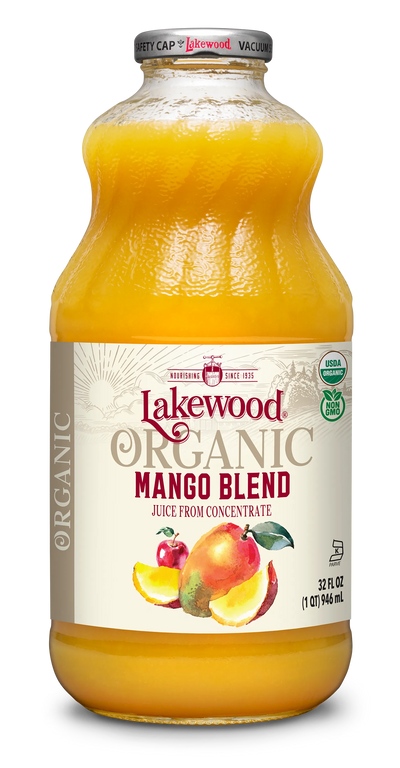
Soft, tropical and sweet.
- Vitamin A
- Vitamin C
- Carotenoids
Mango carries both vitamin C and the carotenoids the body turns into vitamin A, the pair most associated with skin and with normal immune function. It also brings mangiferin, a polyphenol studied for antioxidant activity.
Straight, in smoothies, or poured over sparkling water with lime.
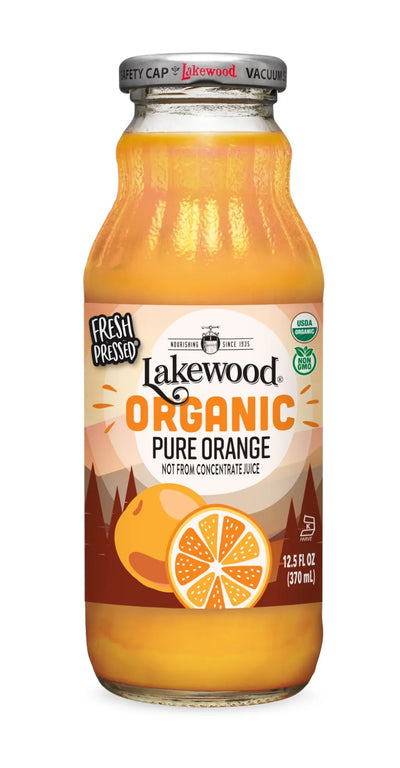
 Orange


Orange
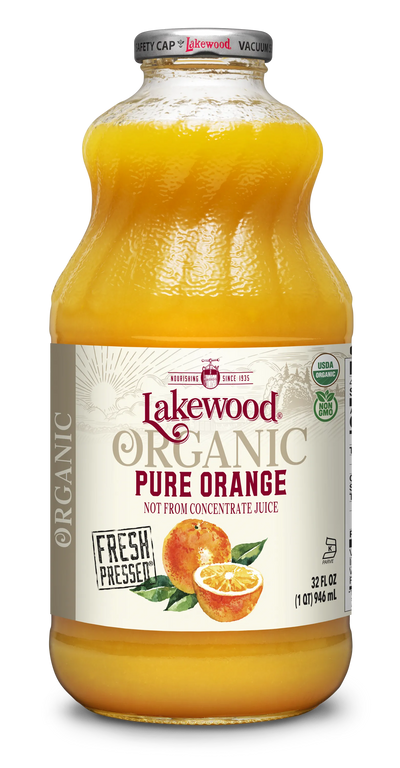
The breakfast standard, sweet with a little acidity.
- Vitamin C
- Folate
- Hesperidin
- Potassium
One glass covers a day's vitamin C for most adults, which is the plainest reason orange juice has stayed on breakfast tables. Oranges also carry folate, potassium, and hesperidin, a citrus flavonoid studied for its effect on blood vessel function and blood pressure.
Straight with breakfast. Half orange juice and half sparkling water makes a lighter glass that still tastes like orange.
 Papaya


Papaya
Soft, mellow and tropical.
- Papain
- Vitamin C
- Beta carotene
Papaya contains papain, an enzyme that breaks down protein, which is why it has been used for centuries both in cooking and as a digestive aid. It also carries vitamin C and carotenoids including lycopene.
Best in smoothies, especially with citrus or a little lime to brighten it.
 Pineapple


Pineapple
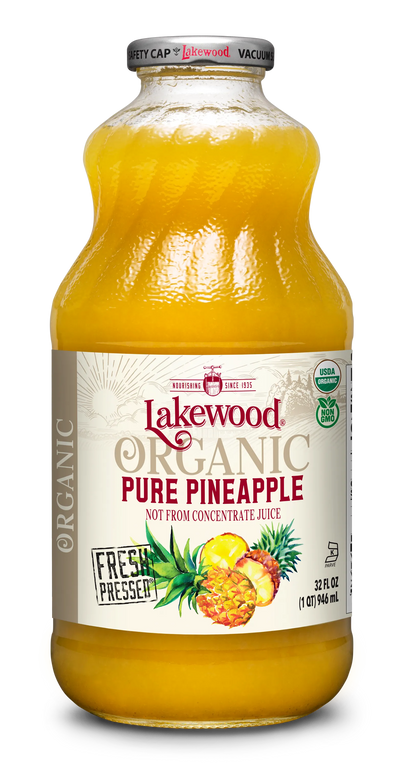
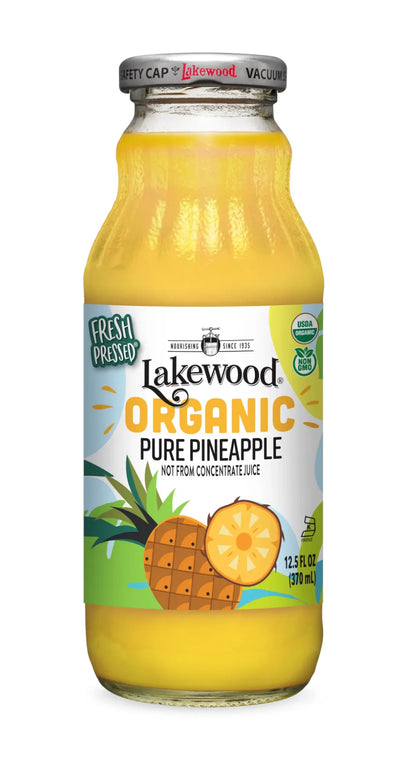
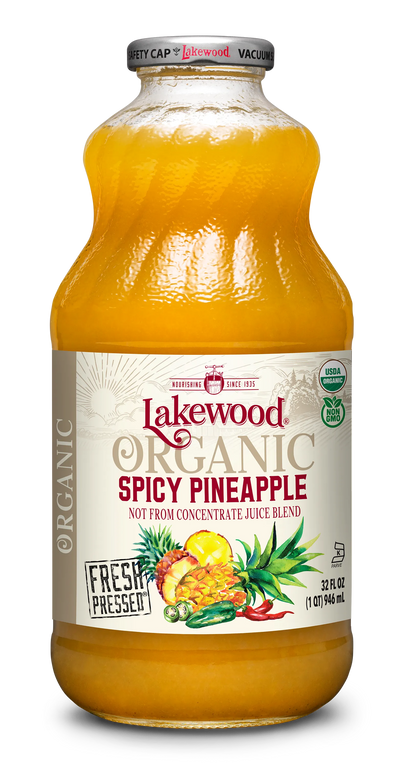
Sweet and tangy at once, and our best seller.
- Bromelain
- Vitamin C
- Manganese
Pineapple carries bromelain, a group of enzymes that break down protein. Research on bromelain looks at digestion, at swelling and recovery after injury or surgery, and at inflammatory markers. Pineapple is also a strong source of vitamin C and of manganese, which the body uses in bone formation.
Very cold and straight. It also mixes well with coconut water, and it is a classic base for a marinade.
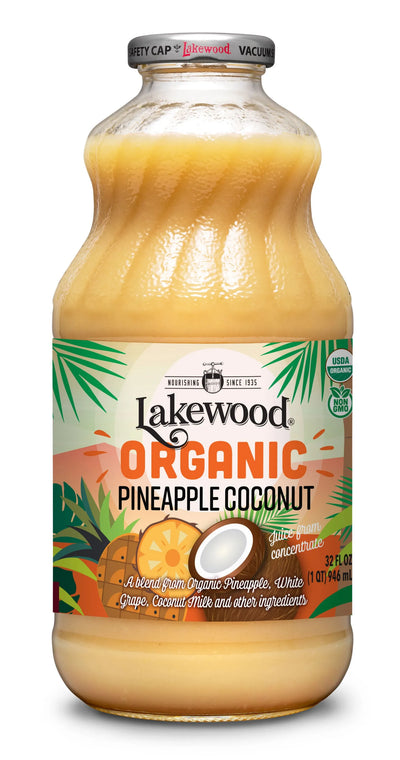
 Pink Grapefruit


Pink Grapefruit
Tart with a bitter edge and a little sweetness.
- Vitamin C
- Lycopene
- Naringin
The pink color comes from lycopene, the same carotenoid that colors tomatoes, studied for antioxidant activity and for heart health. Grapefruit also carries vitamin C and naringin, the flavonoid behind its bitterness. One practical note: grapefruit interacts with a number of prescription medications, so check with your pharmacist if you take any.
Over ice with sparkling water and a pinch of salt, which tames the bitterness. Also good with a splash of orange.
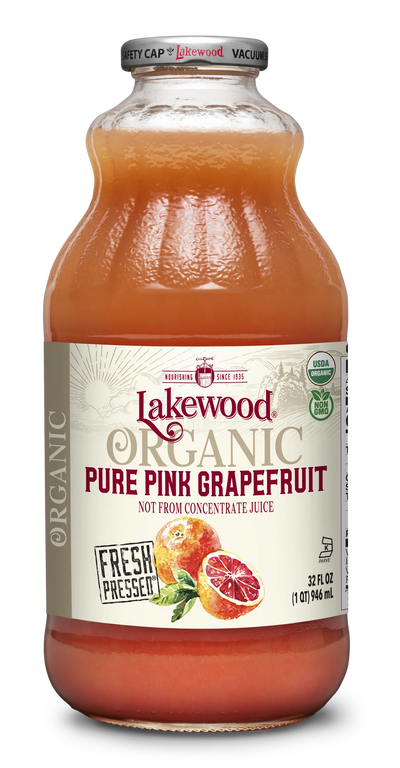
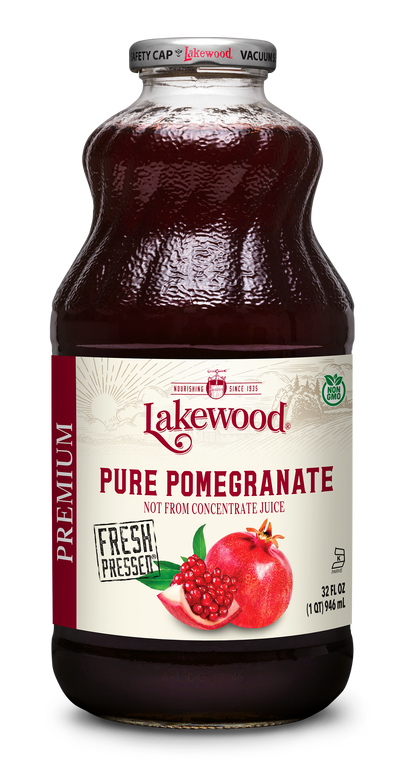
 Pomegranate


Pomegranate
Deep, tart and a little astringent.
- Punicalagins
- Anthocyanins
- Vitamin K
Pomegranate carries punicalagins, among the most studied polyphenols in any fruit. Research looks at their antioxidant activity and at how they affect blood vessel function, blood pressure and cholesterol oxidation, which is why pomegranate juice has been the subject of so many heart health trials.
Rich enough that 2 to 3 ounces in sparkling water goes a long way. In the kitchen, reduce it down into a glaze.
 Prune
Prune


Prune
Dark, rich and mellow.
- Sorbitol
- Fiber
- Potassium
- Vitamin K
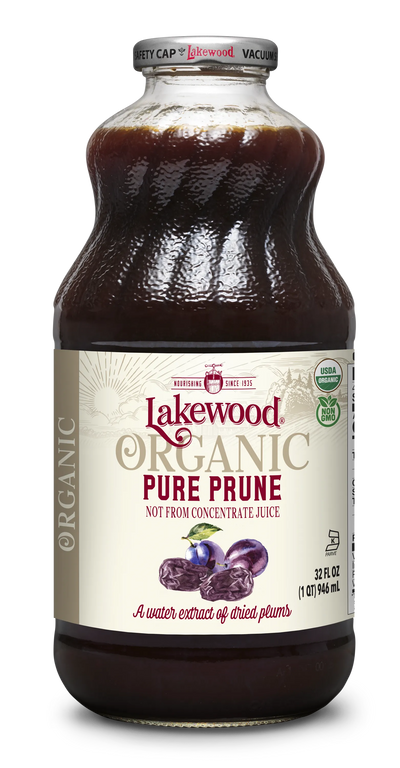
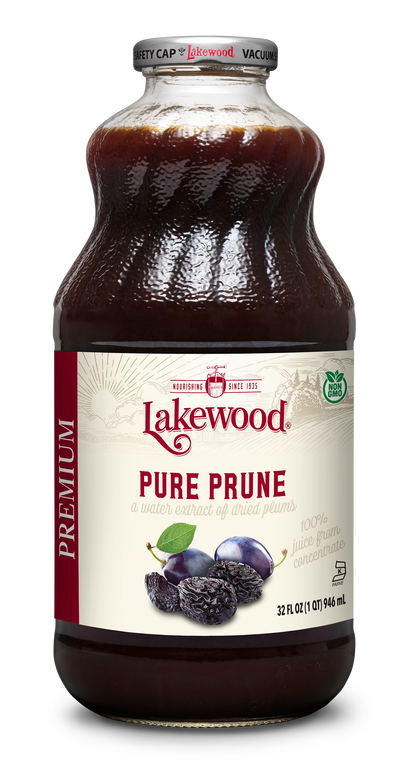
Prunes are widely known for regularity, and the reason is sorbitol, a natural sugar alcohol that draws water into the intestine, along with their phenolic compounds. Prunes are also a strong source of potassium and vitamin K, and research in older adults has looked at prunes in connection with bone density.
A small glass is the usual serving, often warmed slightly. It also blends well with apple juice.
 Turmeric


Turmeric
Golden, earthy and slightly bitter.
- Curcumin
- Piperine pairing
Turmeric's color and its research interest both come from curcumin. Studies look at curcumin's effect on inflammatory markers and on joint comfort. Curcumin is poorly absorbed on its own, which is why black pepper, whose piperine improves absorption, is so often added alongside it.
Turmeric comes through in our blends. Warm a glass with ginger, a squeeze of lemon and a pinch of black pepper.
These notes describe what research on each fruit and vegetable examines. They are not claims about what any Lakewood juice does. These statements have not been evaluated by the Food and Drug Administration. This product is not intended to diagnose, treat, cure or prevent any disease. If you take prescription medication or have a health condition, talk with your doctor before making changes to what you drink.
Lakewood Nurture
Juice made to do a job
Four organic functional juices, each built around one goal: digestion, immune health, women's health and natural energy. All four are USDA Organic, non-GMO, gluten free and bottled in glass, with no preservatives or artificial ingredients. Tap a bottle to see what's inside.
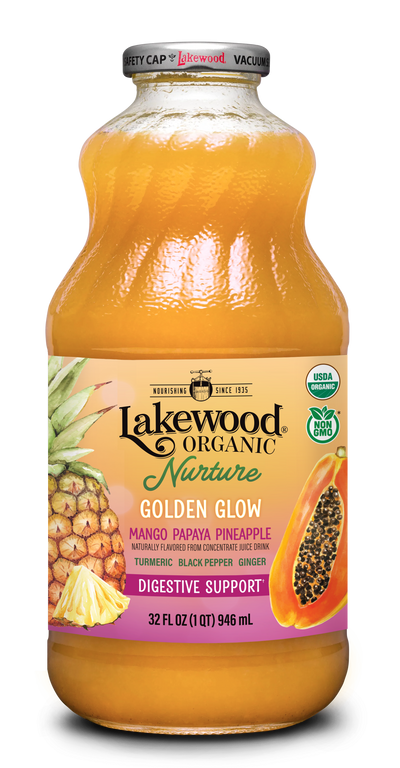
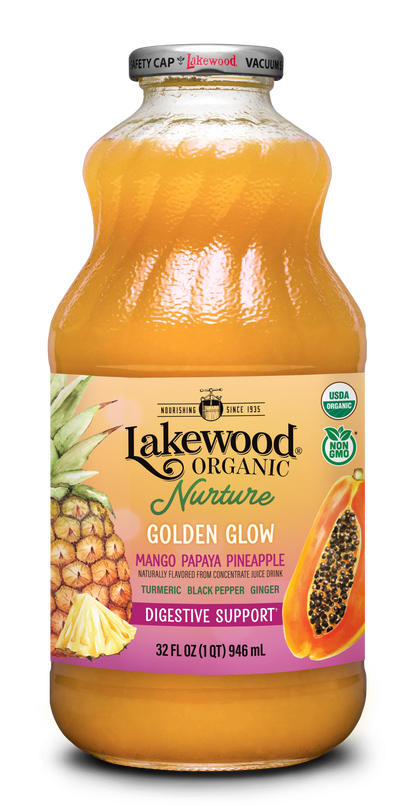
Golden Glow
A tropical blend made to support digestion and to help the body absorb nutrients. Bright, lightly tangy and gently sweet, and an easy one to drink alongside a meal.
Prebiotic, not probiotic. Probiotics are live bacteria. Prebiotics are fibers that feed the good bacteria already in your gut. Golden Glow contains organic agave inulin, a prebiotic fiber, and no live cultures.
What's inside


- Organic mango, papaya, pineapple and lime
- Organic agave inulin, a prebiotic fiber
- Ginger and turmeric, long used to support comfortable digestion
- A pinch of black pepper
- Agave inulin
- Ginger
- Turmeric
Zesty Defense
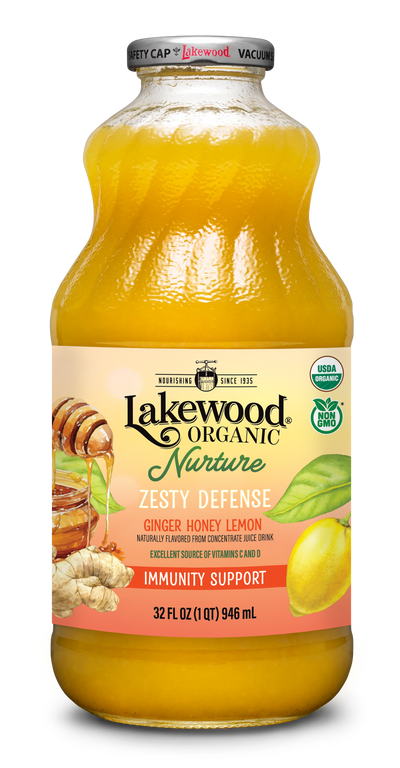
Ginger, lemon, honey and turmeric with added vitamin C, vitamin D3 and zinc, made to support immune health. A nice fit for a morning routine or when the seasons change.
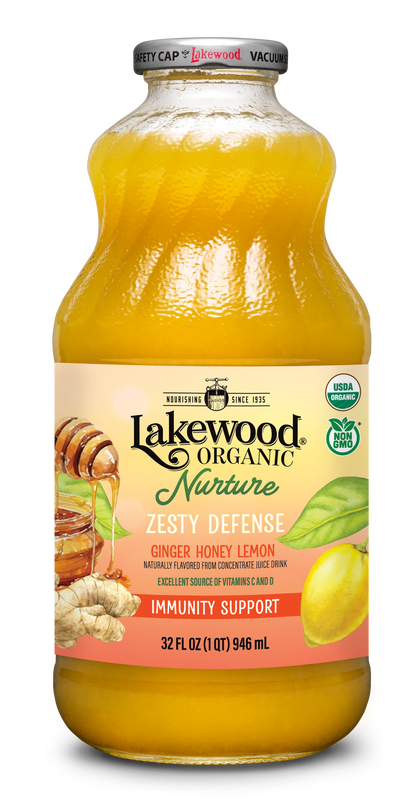
What's inside


- Organic lemon, orange, pineapple and ginger juice
- Turmeric, black pepper and a little organic honey
- Vitamin C, vitamin D3 and zinc, nutrients that support normal immune function
- Vitamin C
- Vitamin D3
- Zinc
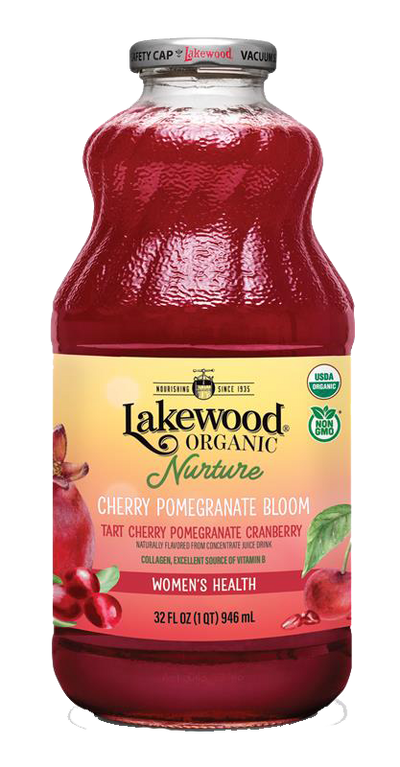
Cherry Pomegranate Bloom
A berry-forward blend with collagen and added vitamins, made to support women's health, including skin and urinary tract wellness.
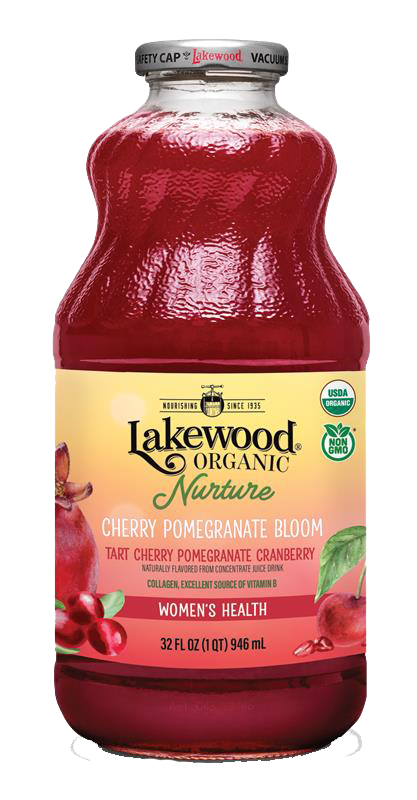
What's inside


- Organic tart cherry, pomegranate and cranberry
- Citrus and pear, with organic honey for light sweetness
- Collagen peptides
- Added vitamins and minerals
- Collagen peptides
- Added vitamins
- Added minerals
Berry Thunder
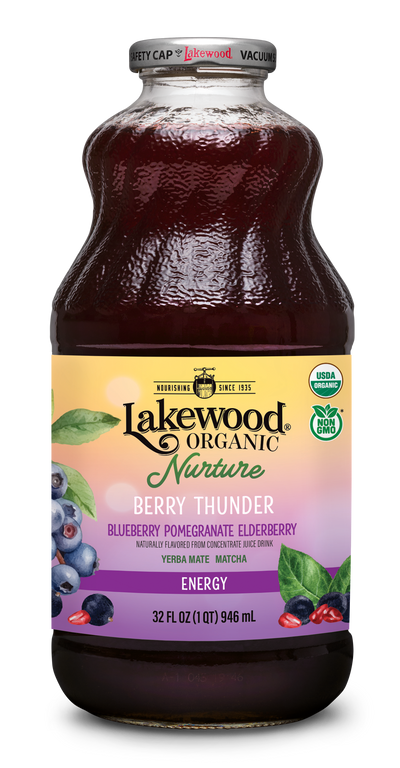
Organic berries with plant-based caffeine from yerba mate and matcha, for natural energy and focus. No synthetic stimulants and no sugar added beyond the fruit.
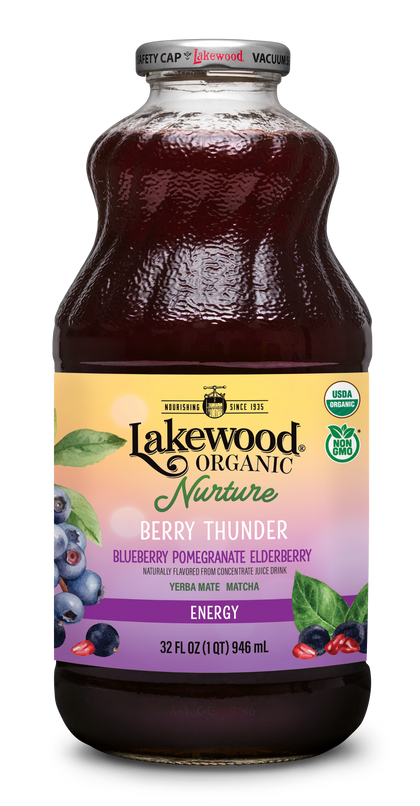
What's inside

- Organic blueberry, pomegranate and elderberry
- Organic pear and orange
- Organic matcha green tea leaf powder, a source of plant-based caffeine
- Organic yerba mate leaf powder, the second source of natural caffeine
- Natural caffeine
- Matcha green tea
- Yerba mate
- Elderberry
Everyday wellness
Ways to work juice into your day
Juice fits into more than a breakfast glass. Here's how our own families use it.

Morning glass
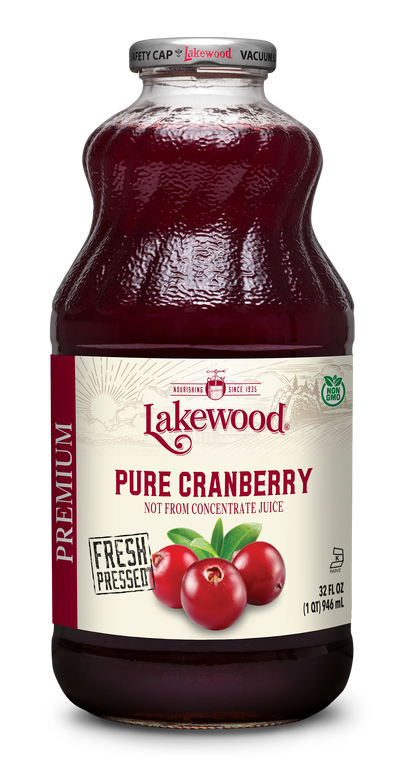
A small glass of Pure Orange or Pure Pineapple alongside breakfast, or Premium Pure Cranberry if you want something sharper.

Smoothie base
Pure Blueberry or Pure Tart Cherry blended with frozen fruit, yogurt or a handful of greens, instead of water or ice.

In the kitchen
Pure Lemon in dressings and marinades, Pure Pomegranate reduced into a glaze, Pure Carrot stirred into a soup.

Before or after a workout
Pure Beet ahead of a run for its natural nitrates, or Pure Tart Cherry afterward, which is where a lot of athletes use it.

When you need it warm
Carrot Ginger Turmeric heated gently with a squeeze of lemon, for the kind of morning where nothing cold sounds good.

Sparkling and simple
A splash of Pure Cranberry, Pure Concord Grape or Pure Aloe topped with sparkling water, for something lighter than soda.
In every bottle
What goes into every bottle
Lakewood Organic started as a small, family-run fruit business in Miami, Florida. Our founder, Fred Fuhrman, set out to make the highest quality, most authentic juice possible, and that is still the goal behind every bottle we make, from our single-fruit juices to our Nurture blends.

Glass, not plastic
We bottle in glass only. It holds the flavor and freshness of the juice better than plastic, it is free from BPA, BPS and DEHP, and it is 100% recyclable.

Certified organic
Our organic fruit and vegetables are grown and harvested under the USDA National Organic Program: strict rules for soil quality, pest and weed control, and no growth regulators, synthetic fertilizers or other prohibited substances.

Fresh Pressed
Most Lakewood juices are Fresh Pressed, which means the juice is pressed straight from the fruit or vegetable, not built back up from extracts or flavoring.
Across our Pure juices
- No preservatives
- Non-GMO
- Unsweetened
- 100% vegan
- Gluten free
- All glass bottles
Not from concentrate
Juice that was never taken apart
A lot of the juice on the shelf has been reduced to a concentrate, shipped, and then mixed back up with water. Many Lakewood juices skip all of that. The way we take the juice out of fresh fruit and vegetables leaves it not from concentrate, which keeps the fullest natural flavor.
That's why you'll see "Not From Concentrate" called out on our labels. It tells you the juice in the bottle is the juice that came out of the fruit, with no water added back.
Not from concentrate
- Fruit is pressed
- Juice is bottled
Nothing removed, nothing added back.
From concentrate
- Fruit is pressed
- Water is removed
- Concentrate is stored or shipped
- Water is added back
- Juice is bottled
Our blends and some of our other juices do use concentrate, and the ingredient list always shows which parts.
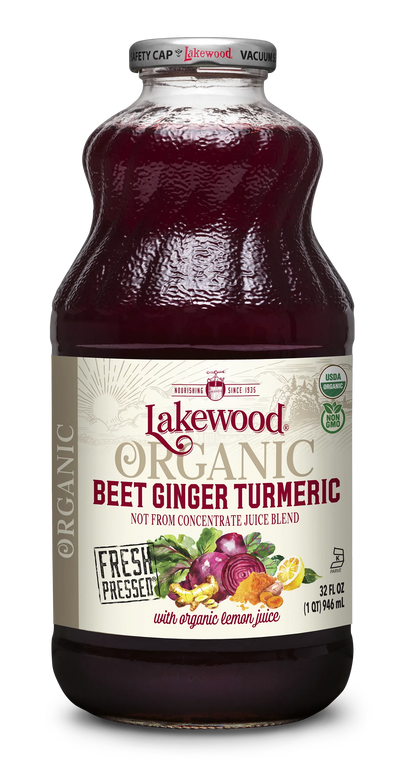 Organic Beet Ginger Turmeric
 Organic Carrot Ginger Turmeric
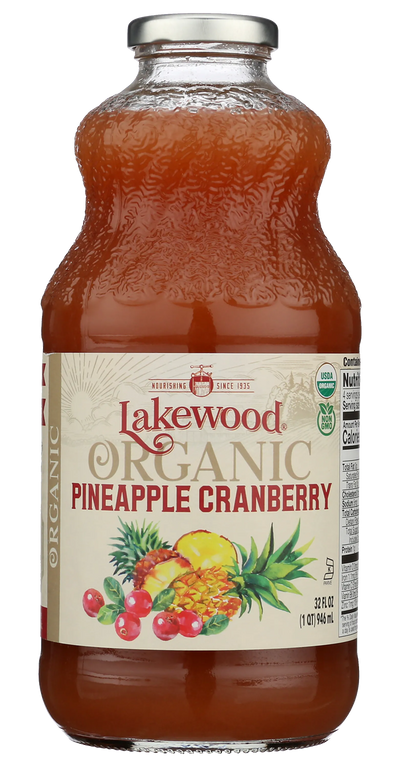
 Organic Cranberry Blend
 Organic Cranberry Blend
 Organic Orange & Carrot Blend
 Organic Orange Mango Blend
 Organic Papaya Blend
 Organic Pineapple Ginger
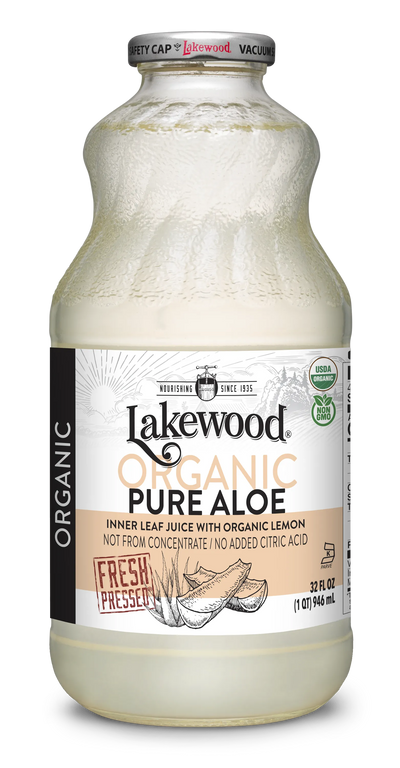 Organic Pure Aloe Inner Fillet
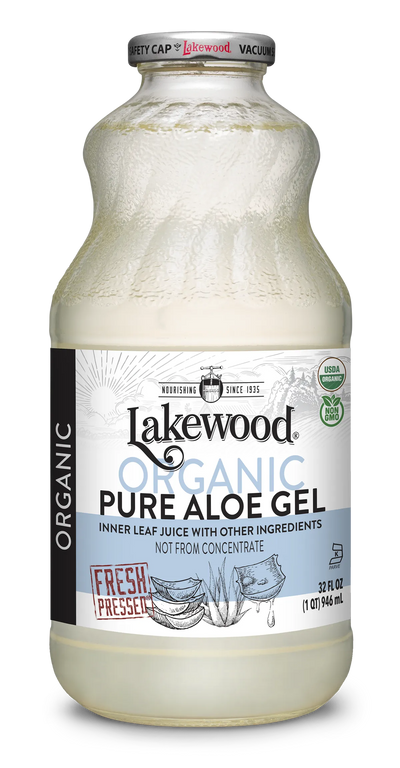 Organic Pure Aloe Gel
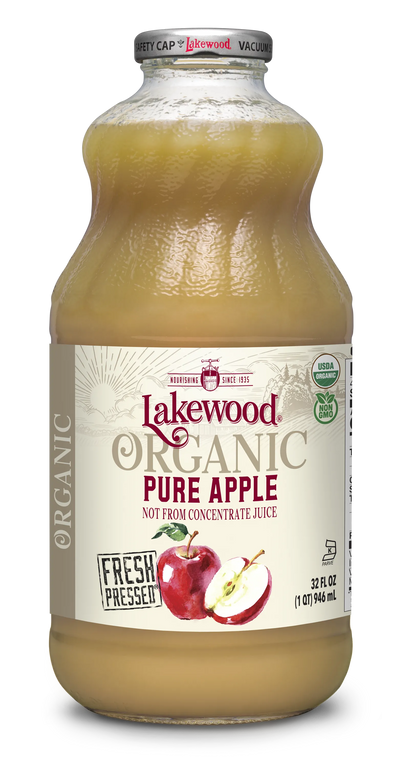 Organic Pure Apple100% Apple
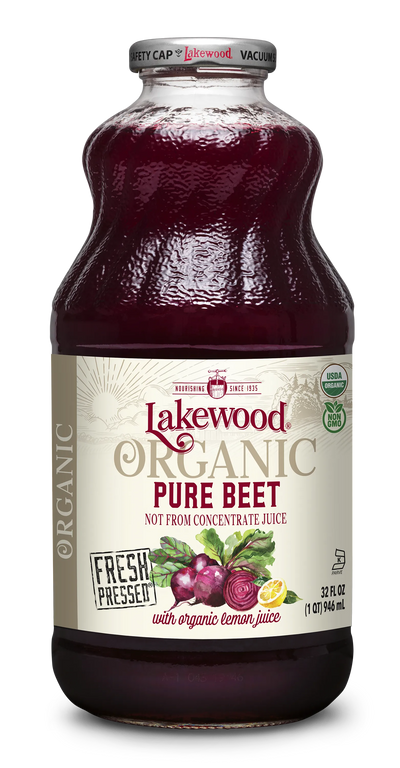 Organic Pure Beet
Our juices
Five lines, one family
Every Lakewood juice is bottled in glass. Here's how the five lines differ, and what sits in each one.
Organic
Our core range of certified organic juices, from single-fruit Pure juices to vegetable juices and blends.
- Certified organic under the USDA National Organic Program
- Many are 100% juice, not from concentrate
- No preservatives, no added sugar, non-GMO
Nurture
Organic functional juices with herbs, vitamins and minerals, each made for one goal: digestion, immune health, women's health or natural energy.
- Digestion, immune health, women's health and natural energy
- No preservatives or artificial ingredients
- Kosher and gluten free

Aloe
Our Pure Aloe juices are Fresh Pressed from three pounds of organic aloe and are not from concentrate.
- Organic lemon juice is added, so no preservatives are needed
- Inner Fillet is aloin free
- Whole Leaf and Aloe Gel round out the line
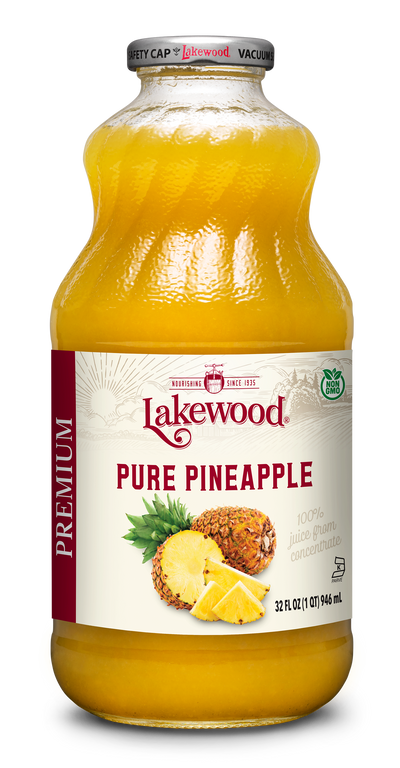
Premium
All-natural juices grown and bottled without GMOs or preservatives. Premium is our conventional line, so it is not organic.
- Not organic, held to the same quality standards
- No GMOs and no preservatives
- Bottled in glass, same as the organic line
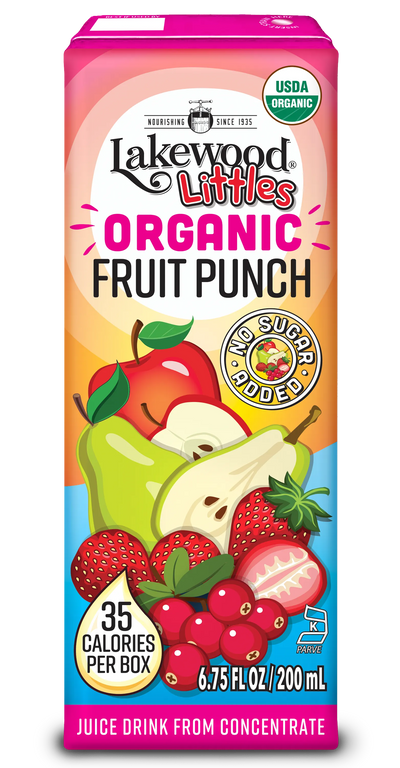
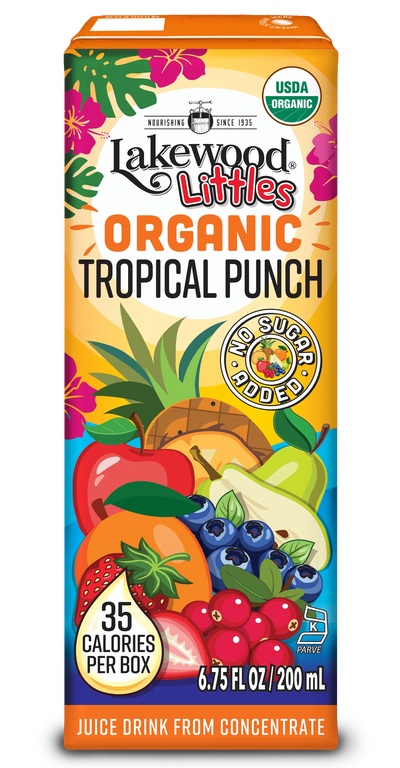
Littles
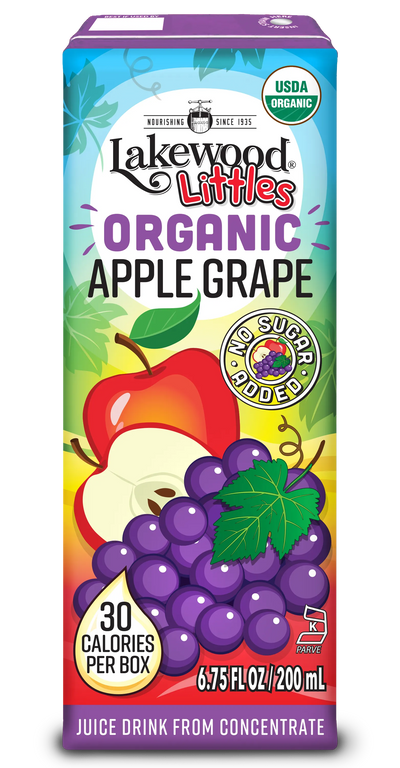
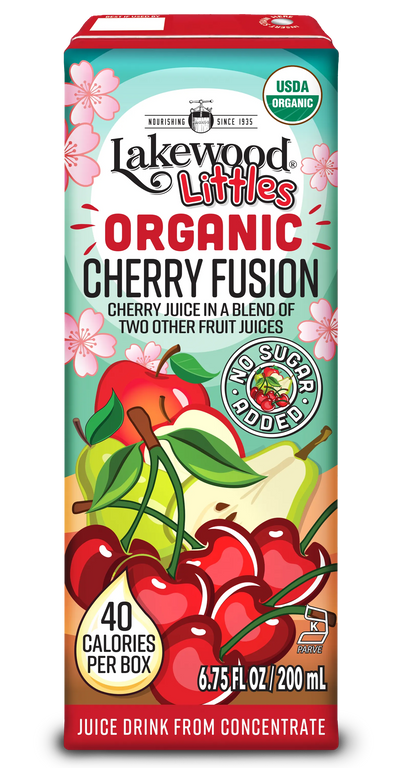
Organic juice boxes sized for kids, in five flavors: Apple, Apple Grape, Fruit Punch, Tropical Punch and Cherry Fusion.
- 100% organic fruit juice, with no added sugars or colors
- Non-GMO, vegan, gluten free and kosher (KOF-K)
- 8-packs of 6.75 fl oz boxes, free from the top nine allergens

Questions
Good to know
What does not from concentrate mean?
Not from concentrate juice is bottled as it comes out of the fruit. It is never reduced to a concentrate and later mixed back up with water. Many Lakewood juices are not from concentrate, and it is called out on the label.
What does Fresh Pressed mean on a Lakewood label?
Fresh Pressed means the juice is pressed straight from the fruit or vegetable, rather than built back up from extracts or flavoring. Most Lakewood juices are Fresh Pressed.
What are the different Lakewood juice lines?
Lakewood makes five lines. Organic is our range of certified organic juices. Nurture is our line of organic functional juices, covering digestion, immune health, women's health and natural energy. Aloe is our range of certified organic aloe juices. Premium is our conventional, non-organic line. Littles are organic juice boxes for kids. Every Lakewood juice is bottled in glass.
What is Lakewood Nurture?
Nurture is Lakewood's line of organic functional juices. Each one combines real fruit juice with herbs, vitamins or other ingredients chosen for a goal: Golden Glow for digestion and nutrient absorption, Zesty Defense for immune health, Cherry Pomegranate Bloom for women's health, and Berry Thunder for natural energy and focus from yerba mate and matcha.
Does Golden Glow have probiotics?
No. Golden Glow contains organic agave inulin, which is a prebiotic fiber. Prebiotics feed the beneficial bacteria already in your gut. It does not contain live probiotic cultures.
Is Lakewood Premium organic?
No. Lakewood Premium is our conventional line of all-natural juices, made without GMOs or preservatives, but it is not certified organic. Our organic juices are sold under Lakewood Organic and carry the USDA Organic seal.
What does the USDA Organic seal on a Lakewood bottle mean?
It means the fruit and vegetables were grown and harvested under the USDA National Organic Program, with strict rules for soil quality, pest and weed control, and no growth regulators, synthetic fertilizers or other prohibited substances. Lakewood Organic, Nurture, Aloe and Littles carry the seal. Lakewood Premium is conventional and does not.
Why does Lakewood use glass bottles?
Every Lakewood juice is bottled in glass instead of plastic. Glass is free from BPA, BPS and DEHP.
Which juices do people drink for digestion?
Pure Prune is the one most people know for regularity. Pure Pineapple carries bromelain, an enzyme associated with digestion, Carrot Ginger Turmeric brings ginger into it, and Pure Aloe is another common pick. Nurture Golden Glow is built for this, with organic agave inulin as a prebiotic fiber.
Which juices are highest in antioxidants?
The dark fruits are where people look: pomegranate for punicalagins, blueberry for anthocyanins, and concord grape and cranberry for polyphenols. Pure Pomegranate, Pure Blueberry, Pure Concord Grape and Pure Cranberry each give you one on its own, and Nurture Berry Thunder blends several together.
What do athletes use juice for?
Two reasons come up most. Beet juice for its natural nitrates, usually before exercise, and tart cherry juice for recovery afterward. Pure Beet, Beet Ginger Turmeric and Pure Tart Cherry all cover that ground.